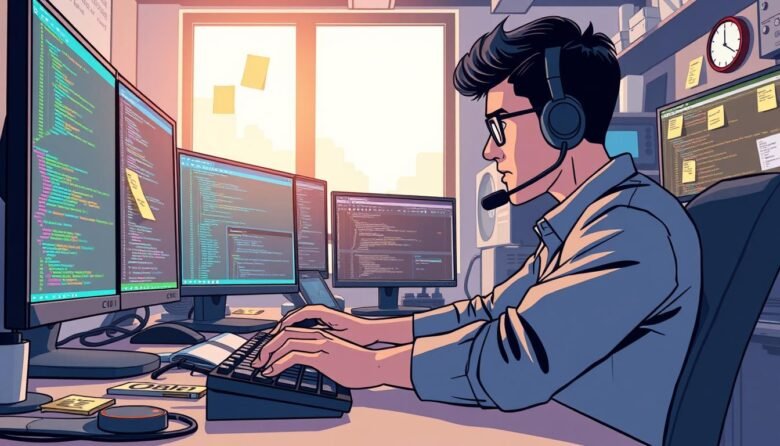
Does your workday feel like a constant juggling act? For many in software development, that “quick” Slack message or impromptu meeting can derail an entire morning. This constant shifting between tasks is a major drain on productivity.
Research reveals a startling truth. Each interruption can steal over 20 minutes of focused work. Nearly a third of interrupted tasks are never finished. This isn’t just about lost time. It disrupts your creative flow and leads to more errors.
This guide offers a practical path forward. We’ll explore smart strategies for individual contributors and team leaders. The goal is to protect deep focus without sacrificing collaboration or delivery speed.
Modern workflows are filled with potential distractions. The key isn’t to eliminate all interruptions. It’s to understand their true cost and build systems that minimize their impact.
Key Takeaways
- Constant task switching is a major productivity killer for software teams.
- A single interruption can require over 20 minutes to fully regain focus.
- Many interrupted tasks are never resumed, wasting valuable effort.
- This problem affects both individual contributors and team managers.
- Practical solutions exist to minimize disruptions and protect flow state.
- The goal is sustainable productivity, not the elimination of all collaboration.
Understanding the Cost of Context Switching for Developers
The human brain pays a steep price every time it’s forced to abandon one task for another. Unlike computers that instantly swap processes, our minds need significant time to unload one complex problem and fully load the next.
The Mental Overhead of Shifting Focus
This mental reloading process creates what psychologists call “attention residue.” Thoughts from your previous work linger, draining your cognitive capacity. Your working memory can only handle about seven items at once.
When you’re deep in complex coding, you’re holding system architecture, business logic, and implementation details in mind. An interruption forces you to dump this mental model. Rebuilding it takes precious time and mental energy.
Impact on Code Quality and Productivity
The quality of your work suffers dramatically when you’re constantly switching contexts. Fragmented attention makes it easy to miss important details and introduce subtle bugs. This creates technical debt that requires extra debugging later.
Research shows software professionals switch tasks 59% of their day. Nearly one-third of interrupted work never gets finished. This cumulative loss means teams waste hours of productive time daily.
The real cost isn’t just lost minutes. It’s the compounding effect on your ability to do deep, meaningful work that creates real value. Constant interruptions push people toward quick wins instead of substantial contributions.
Analyzing the Disruption: How Interruptions Break Developer Flow
That magical zone where complex problems seem to solve themselves is surprisingly fragile. Mihaly Csikszentmihalyi called this optimal psychological condition “flow state.” It transforms challenging work into effortless creation.
The Science Behind Attention Residue
Researcher Sophie Leroy discovered a crucial concept called attention residue. When pulled from complex coding, part of your brain stays stuck on the original task. This mental lingering lasts 30-60 minutes.
Even seeing a notification can break concentration without responding. Flow state requires about 15 minutes of uninterrupted focus to achieve. But a single alert can instantly shatter this delicate mental state.
Operational Pitfalls in Development Workflows
Typical development environments create unnecessary mental shifts. Fragmented schedules packed with meetings disrupt natural rhythm. Unclear priorities force multitasking across competing projects.
Research shows interrupted tasks take twice as long to complete. They contain twice as many errors compared to uninterrupted work. High-dominance interruptions like urgent manager requests cause significant disruption.
Building complex features requires maintaining multiple mental models simultaneously. Reconstruction after interruptions becomes time-consuming and mentally exhausting. This creates a cascade effect where minor disruptions lead to major productivity losses.
Reducing Context Switching Developers: The Key to Better Workflow
Creating a workflow that supports sustained concentration is the cornerstone of high-quality software development. This approach isn’t about isolation. It’s about being intentional with your attention to respect the cognitive demands of the work.
Maintaining Deep Work and Focus
Cal Newport’s concept of deep work describes focused, uninterrupted periods that produce the best output. Protecting 4-6 hours of this deep work daily is a non-negotiable priority.
Research indicates 90-minute blocks are optimal for maintaining focus. Align these blocks with your natural energy peaks, typically in the morning. This practice helps you enter a productive flow state.
Strategies to Combat Frequent Task Switching
Limit your active tasks to just one or two items. This prevents your mind from juggling too many threads. Establish clear priorities so everyone knows what deserves immediate attention.
Use visual indicators like a dedicated Slack status to signal your focus time. Teams that implemented these protections saw a 35% increase in story completion. They also reported a 28% drop in bugs.
Success requires both personal discipline and team support. Managers must create a culture that respects these focused work boundaries.
Best Practices for Minimizing Task Interruptions
The most successful professionals build their days around strategic time management practices. These approaches help maintain momentum while protecting valuable concentration.
Setting Clear Task Boundaries and Priorities
Start by limiting your active work to just one or two items. This prevents mental overload from juggling multiple threads. Force-ranking your priorities ensures you know what deserves immediate attention.
Have honest conversations about what gets your focus first. Not everything can be top priority. This clarity helps you finish work instead of making minimal progress on too many things.
Scheduling Uninterrupted Focus Intervals
Time blocking creates protected periods for deep work. Dedicate specific calendar blocks exclusively to coding. Treat these appointments as seriously as client meetings.
The Pomodoro technique offers micro-level focus strategy. Work in intensive 25-minute sprints followed by short breaks. This rhythm maintains concentration while preventing burnout.
Group similar tasks together during your day. Designate certain afternoons as “coding only” or establish meeting-free days. This batching approach reduces mental shifting between different types of work.
Plan your schedule at day’s end or each morning. Map out priorities during peak energy hours. This proactive approach beats reacting to whatever grabs attention first.
Tool and Process Innovations to Limit Context Switches
Modern development platforms offer built-in safeguards against workflow fragmentation. The right technological infrastructure serves as a protective barrier against productivity drains.
Leveraging CI/CD and Automation Tools
Fast, reliable CI/CD pipelines complete builds in under 10 minutes. This prevents the temptation to check email or start other work while waiting. Quick feedback keeps your mind engaged with the current task.
Self-service tooling empowers team members to provision environments without filing tickets. One-click deployment scripts eliminate manual steps that create waiting periods. These automation improvements maintain momentum throughout the development cycle.
Streamlining Pull Request Workflows with Modern Platforms
Small pull requests under 400 lines enable faster code review. They reduce cognitive burden on reviewers and prevent blocking situations. Breaking large features into incremental changes allows parallel progress.
Automated code formatting and linting catch issues instantly. This reduces back-and-forth during the review process. Modern platforms support trunk-based development with feature flags, minimizing merge conflicts.
Team Strategies for Enhancing Productivity and Minimizing Interruptions
Individual efforts can only achieve so much without team-wide commitment. True workflow improvement requires collective buy-in and leadership support across the entire engineering organization.
One powerful approach involves implementing protected focus blocks. Many successful teams designate specific time periods as interruption-free zones. This creates sacred hours for deep development work.
Implementing No-Meeting or Focus Blocks
Teams that establish “no meeting Wednesdays” or protected afternoons see remarkable results. Research shows 35% higher story completion rates and 28% fewer bugs when focus time is respected. Team satisfaction improves by 45%.
Engineering managers play a crucial role by leading through example. They respect boundaries and decline unnecessary meetings. This creates a culture where saying “I’m in focus mode” becomes acceptable.
Batching necessary interactions maximizes uninterrupted coding time. Cluster agile ceremonies on specific days to create larger work blocks. Keep daily standups under 15 minutes, focusing only on blockers.
Successful strategies require ongoing refinement through regular retrospectives. Teams continuously improve their approach to minimizing productivity-killing interruptions.
Communication Protocols and Workflow Adjustments in Engineering
The expectation of immediate responses in modern workplaces has quietly become one of the biggest productivity drains in software development. Engineering teams need clear communication protocols that respect focused work time while maintaining collaboration.
Establishing Asynchronous Communication Norms
Successful teams create explicit guidelines for different types of requests. They distinguish between urgent production issues and routine questions that can wait.
Create dedicated Slack channels for specific topics instead of relying on direct messages. This allows the right person to respond naturally without immediate interruption. Set clear response time expectations across your engineering team.
Normalize phrases like “no rush on this” to reinforce async communication culture. This approach protects deep work while ensuring important messages get attention.
Efficient Code Review and Notification Management
Configure GitHub notifications to batch updates rather than deliver them in real-time. This prevents constant interruptions during focused coding sessions.
Use Slack’s scheduled send feature to compose messages immediately but deliver them during appropriate hours. Establish team norms around code review turnaround times to prevent blocking situations.
Encourage developers to use “Do Not Disturb” modes during critical work periods. These technical solutions complement cultural shifts toward more thoughtful communication.
Modern Code Review Tools and Their Role in Reducing Context Switches
What if you could continue coding while your previous changes were being reviewed, eliminating waiting periods entirely? Modern code review tools like Graphite make this possible by transforming the traditional development workflow.
Integrating Tools Like Graphite for Seamless Workflows
Graphite introduces stacked pull requests—a game-changing approach to feature development. Instead of one massive PR, you create a series of small, focused changes. This allows continuous progress while earlier parts undergo review.
The platform’s CLI and VS Code integration automate complex branch management. You can create and update dependent PRs without manual Git operations. This keeps you in your development environment instead of switching between tools.
Teams at Asana adopted this stacked workflow and documented impressive results. They reclaimed approximately 7 hours per engineer weekly while shipping 21% more code. The unified dashboard provides clear visibility into all open pull requests and their status.
Graphite’s AI assistant catches common issues before human review. This reduces back-and-forth cycles that typically extend PR lifetimes. The goal is maintaining flow by ensuring there’s always productive work available.
These tools remove friction from the review process while preserving human oversight. They represent the next evolution in development workflows designed for sustained focus.
Wrapping Up: Sustaining Developer Flow for Long-Term Productivity
The journey toward sustainable engineering productivity begins with recognizing the true enemy of focus. Constant task switching fragments your team’s time and drains mental energy. But the good news is that this challenge has practical solutions.
Sustainable improvement requires action at multiple levels. Individual professionals can protect their concentration through deep work blocks. Teams can establish communication norms that respect focus time. Organizations can invest in tools that minimize unnecessary interruptions.
The goal isn’t perfection but intentionality. Balance collaboration with protected coding periods. Start with one or two strategies that address your team’s specific pain points. Measure results and gradually build upon your successes.
When you protect flow state, you create happier teams and higher-quality output. This approach benefits both individual well-being and organizational success. The payoff is worth the effort.