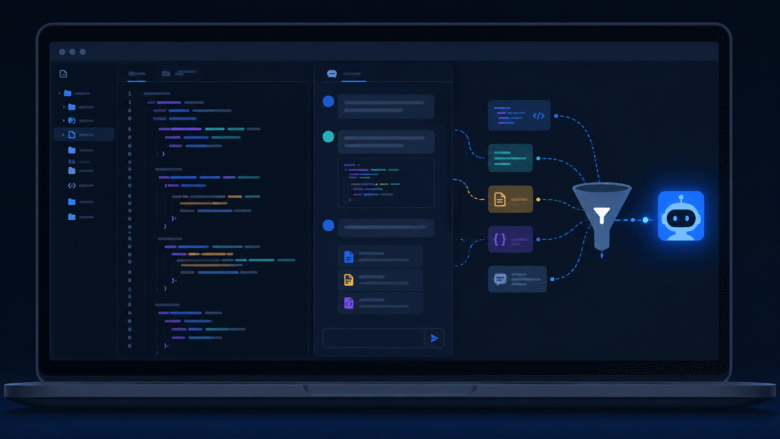
Dumping your whole codebase into an AI assistant doesn’t make it smarter — it makes it worse. Here’s how to build a real context budget that cuts token waste and gets code you can actually trust.

Retrieval-Augmented Generation stripped of the acronym: fetch relevant data at query time and hand it to the model, instead of retraining on your own data.

You ask the model to review your authentication middleware. It returns a surface-level summary: “the code looks clean, consider adding error handling.” That output is useless. The model did not understand its role, the codebase context, or what “review” actually means in a production environment. Role prompting fixes this — not by making the model …

Learn how to train AI behavior using few-shot prompting examples. Discover the power of AI training with just a few examples in this step-by-step guide.
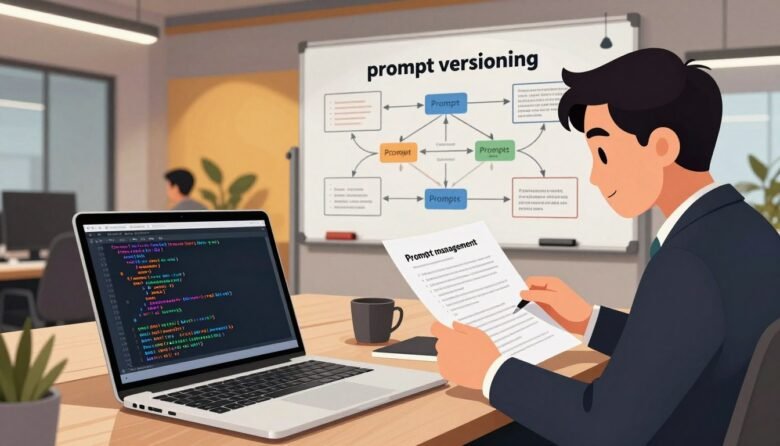
Learn prompt versioning best practices to effectively manage and test your prompts like production code, ensuring reliability and consistency in your AI applications.

You get paged at 2 a.m.: an LLM-backed agent just approved a refund that violates policy. The postmortem shows the model skipped a constraint mid-generation and returned a confident but incorrect result. Your goal is narrow and technical: make the model allocate tokens to structured reasoning so multi-step checks stop collapsing into plausible nonsense. You …

You merge a PR. CI is green. Linters passed. Approvals come fast. Two days later you roll back a production bug that was obvious in the diff. This is the real problem: reviewers skim, comments collapse into “looks fine,” and the root cause is intent or edge cases, not formatting. You need a structured check …

You are midway through a security review before a release. The assistant drifts into style refactors and you lose time steering it back to threat models and patch scope. That exact friction kills velocity and raises review cycles. The premise is simple: you do not need smarter output. You need predictable output that you can …

You drop your “code review” prompt from last quarter into a fresh repo. It starts hallucinating module layouts, misses the main issues, and spits output your CI cannot parse. That scenario cost me an afternoon and a rollout last year. You don’t need vague “better” prompts. You need prompts that behave like code: parameterized, versioned, …

You merge a clean-looking refactor and CI erupts: a flaky snapshot test fails and your formatter rewrites half the repo. Your reviewers drown in noise and the patch stalls. You want predictable diffs and no surprise dependencies, not another round of manual fixes. This guide sets a clear goal: get patches you can ship without …