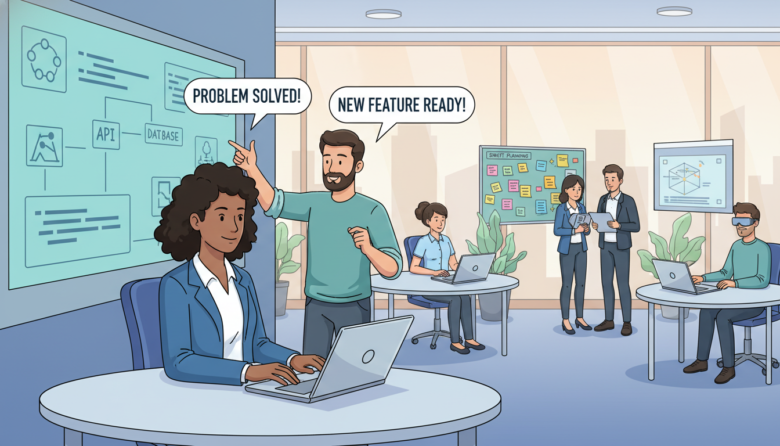
What separates good engineering teams from great ones? Often, it’s not the flashy new frameworks. It’s the quiet, consistent practices behind the scenes. This article explores the powerful routines that top performers use to boost their productivity.
We will dive into practical strategies for building and maintaining software used within a company. These approaches transform how teams create and adopt their own solutions. You will see why treating these resources with care leads to better results.
Adoption rates improve. Errors decrease. The entire group saves significant time. These methods represent a shift in mindset about how we value our own creations.
From automated testing to documentation-driven workflows, the principles apply to everyone. Whether you work alone or on a large platform team, you can build solutions people love to use. Real-world examples, like companies achieving major time and cost savings, prove their value.
This guide provides a clear path forward. You will learn how to eliminate friction, reduce costs, and empower your colleagues. The goal is to help your team focus on what truly matters.
Key Takeaways
- Small, consistent habits can dramatically boost a development team’s output.
- Treating internally built software with the same rigor as customer-facing products yields better outcomes.
- Improved processes lead to higher adoption rates and fewer mistakes.
- These strategies save considerable time and resources for the entire organization.
- The principles are scalable, benefiting solo coders and large engineering teams alike.
- Real companies have documented significant financial savings by implementing these best practices.
- A clear roadmap exists for creating internal solutions that people genuinely want to use.
Embracing Internal Tools as a Product
The most transformative shift in platform engineering begins with a simple change in perspective. Instead of viewing your creations as mere utilities, see them as full-fledged products.
Treating Tools with a Product Mindset
Adopting a product mindset means your work serves real people with specific needs. These individuals deserve the same care as paying customers.
At CyberArk, this approach proved essential. Their platform division treats each creation with a circular lifecycle. This includes requirements gathering, design, implementation, and feedback loops.
Understanding Internal Customers
Your fellow developers are sophisticated users. They have unique workflows and expectations. Gathering input from multiple groups ensures broad usefulness.
Contact system architects directly for detailed feedback. Show them their voices matter. This builds trust and encourages natural adoption.
The key difference between success and failure often comes down to feeling heard. When teams contribute to the process, they become advocates. They want to use what they helped create.
Never rely solely on management mandates. Demonstrate clear value instead. This approach saves time and promotes consistency across the organization.
Mastering the internal tooling habits of pro developers
High-performing teams distinguish themselves through systematic approaches to refinement. They build solutions that evolve with user needs.
Gathering Feedback and Iterating Quickly
Successful creators treat feedback as an ongoing conversation. They listen carefully to user experiences and observations.
This continuous input reveals hidden assumptions and communication gaps. Being open to necessary adjustments keeps solutions relevant.
Rapid iteration cycles demonstrate responsiveness to user needs. This builds trust and encourages adoption across the organization.
Enabling Code Contributions and Open Collaboration
Welcoming contributions from other groups transforms potential bottlenecks. Developers can add desired features without creating separate versions.
Establishing clear standards for documentation and testing ensures quality. A well-defined contribution process makes collaboration smooth.
Once contributions are merged, the core team assumes full responsibility. This approach accelerates development while maintaining consistency.
Streamlining the Coding Process Through Automation
Smart engineering organizations build automation into their DNA, transforming how work gets done. This approach eliminates repetitive manual tasks that drain productivity. Teams can focus on creative problem-solving instead of mundane chores.
Automation creates a foundation for consistent, reliable results. It reduces human error and accelerates delivery timelines. The entire development process becomes more efficient and predictable.
Optimizing CI/CD Pipelines
Well-designed pipelines handle everything from code commits to production deployment. They should require zero manual intervention. This ensures consistent, error-free releases every time.
Automation transforms complex deployment processes into one-click operations. Teams gain confidence in their release cycles. They can deploy frequently without fear of breaking changes.
Automating Infrastructure and Deployment
Many solutions require specific infrastructure components to function properly. Feature flag libraries might need AppConfig setups or API keys stored securely. Providing automated provisioning through CDK constructs or Terraform templates solves this challenge.
These automation tools provision required resources and configure them correctly. They place necessary parameters in the right storage locations. This eliminates setup friction and accelerates adoption.
Migration support is equally important. When teams switch between solutions, automated workflows smooth the transition. CLI tools and scripts reduce resistance and save valuable time.
Enhancing Developer Experience for Higher Adoption
Exceptional adoption rates stem from designing solutions that feel intuitive from the very first interaction. When people can immediately understand how to accomplish their goals, they become enthusiastic advocates rather than reluctant users.
Maintaining Simplicity and Usability
The golden rule for creating effective tools is to assume zero prior knowledge. Design interfaces that explain themselves without requiring extensive documentation. This approach minimizes the learning curve and support requests.
For code libraries, use simple, meaningful argument names with clear docstrings. Limit parameters to only what’s essential. Make common use cases trivially easy to implement.
Simplicity doesn’t mean limiting power—it means hiding complexity behind intuitive interfaces. Basic tasks should feel effortless while advanced capabilities remain accessible when needed.
When users can quickly achieve their objectives without cognitive overhead, your solution becomes the obvious choice. This strategic focus on experience directly impacts adoption metrics and organizational efficiency.
Building Tools Tailored to Diverse Team Needs
The true test of any organizational tool lies in its ability to serve varied workflows. Different groups have unique requirements and constraints that must be addressed.
Customizable Features and Integration Hooks
Finding the right balance is crucial. You want to avoid building multiple versions for different needs. This creates maintenance headaches.
The sweet spot involves designing for common requirements while providing extension points. These hooks allow groups to add specialized functionality without forking the codebase.
Well-defined integration points give autonomy while maintaining control. For libraries, this might mean accepting function pointers with clear interfaces. Each group can inject custom logic while keeping a unified foundation.
- Prevents fragmentation across the organization
- Maintains consistent quality standards
- Reduces long-term maintenance costs
- Respects unique workflow requirements
This approach serves diverse groups effectively. It keeps solutions manageable while allowing necessary adaptations.
Feedback-Driven Design and Continuous Iteration
Creating tools that people actually want to use requires listening more than building. The most successful solutions evolve through ongoing conversations with the people who depend on them daily.
Questionnaires and interviews provide crucial visibility into why colleagues embrace or avoid your creations. This data reveals real usage patterns and pain points that you might otherwise miss.
Refining Features With Real User Insights
Involving early adopters during the design phase catches misunderstandings before they become expensive problems. These initial conversations surface hidden assumptions about workflows and requirements.
Gathering input from multiple teams ensures your design serves diverse needs rather than optimizing for a single group. This broad perspective increases adoption across the entire organization.
Continuous iteration transforms static releases into living systems that grow with changing needs. When people see their suggestions implemented, they become invested partners in the tool’s success.
This feedback loop creates a virtuous cycle where better designs lead to higher adoption, which generates more valuable insights for future improvements.
Achieving High Standards with Automated Testing and Maintenance
Maintaining excellence in software requires a disciplined approach to testing and upkeep. Without proper validation and regular care, even the most innovative solutions can deteriorate over time.
Teams that prioritize these practices build trust through reliability. Their creations work consistently across different environments and use cases.
Implementing Comprehensive Testing Procedures
Thorough validation ensures your solution performs reliably under various conditions. Automated checks should cover multiple runtime versions and configurations.
Comprehensive testing eliminates manual, error-prone steps that frustrate users. It demonstrates your commitment to quality standards that rival external products.
This approach prevents teams from abandoning unreliable tools. They gain confidence in solutions that work repeatedly without intervention.
Establishing a Regular Maintenance Routine
Define clear processes for dependency updates and bug resolution. Monthly reviews keep your system current and secure.
Supporting multiple runtime versions requires careful planning. You cannot force overnight migrations across an organization.
Clear communication about deprecation dates helps teams plan transitions. This reduces frustration and maintains trust in your platform.
Automated maintenance workflows ensure your tools “just work” consistently. This allows colleagues to focus on their core work rather than infrastructure issues.
The Role of Documentation in Internal Tool Success
Many teams overlook the strategic power of comprehensive documentation in their development workflow. This oversight can undermine even the most technically brilliant solutions. Proper documentation transforms how colleagues interact with your creations.
Adopting Documentation-Driven Development
Documentation-driven development flips the traditional approach. You write guides and specifications before writing any code. This forces you to think deeply about user experience from the start.
Starting with documentation helps you confront usability issues early. You discover awkward APIs or confusing CLI behavior when they’re easy to fix. This approach results in more usable and extendable solutions.
Treat your creations as internal open-source projects. Provide GitHub pages with design rationales, tips, and practical code examples. Excellent guides like aws-lambda-env-modeler demonstrate professional standards.
Key benefits of this methodology include:
- Reduced support burden through self-service answers
- Faster adoption across the organization
- Clear vision before implementation begins
- Fewer costly architectural changes later
When people can find answers in clear documentation, they work more confidently. This practice elevates your tools to the same standard as respected open-source projects.
Integrating Best Practices from Industry Leaders
Industry leaders provide valuable blueprints for building effective platform solutions. Their experiences show what works at scale. Learning from these examples can save your organization significant time and resources.
Leveraging Open-Source Principles
Applying open-source methodologies to your platform work brings remarkable benefits. CyberArk’s division demonstrated this over five years. They built libraries for tenant isolation, logging, and metrics.
Their approach treated platform code with public project rigor. This included comprehensive documentation and semantic versioning. Clear contribution guidelines helped manage expectations.
The success of projects like aws-lambda-env-modeler proves these methods work. With over 600 GitHub stars, it shows public repository practices translate well. The same care in documentation and testing applies perfectly.
Learning from Cross-Team Collaboration
Breaking down silos through collaboration multiplies your platform’s impact. When different teams contribute to tools, they carry patterns back to their groups. This spreads best practices organically across the organization.
CyberArk’s automation for creating SaaS services delivered transformational value. It reduced production time by 18 weeks per service. This saved over one million dollars while improving consistency.
Integrating these proven approaches gives your platform team a solid foundation. You can focus on unique organizational challenges rather than reinventing solutions. The results speak for themselves in improved efficiency and adoption.
Tailoring Internal Tools to Meet Unique Organizational Needs
The most powerful internal tools are those that feel like they were built specifically for your company. They fit perfectly into your existing workflows and solve problems that generic software cannot address. This level of customization is a game-changer for efficiency.
Ensuring Scalability and Flexibility
Every organization has unique processes and requirements. Off-the-shelf solutions often force you to adapt your work to their limitations. Custom-built tools, however, can be designed to automate your specific tasks.
This includes specialized data entry, custom report generation, and unique planning processes. Scalability ensures your solution grows alongside your company. It can support a small team today and a large department tomorrow without major changes.
Flexibility is equally important. Your business needs will evolve over time. A well-designed tool can adapt to new compliance rules, technologies, and team structures. This prevents it from becoming obsolete and saves you from costly replacements.
These tailored solutions do more than just automate work. They help you spot inefficiencies in your current systems. This allows for further optimization and streamlines operations across the entire organization.
Optimizing Daily Operations with Efficient Tooling
Many organizations overlook the hidden productivity drain of daily operational tasks. These routine activities consume enormous amounts of developer time through repetitive work and manual processes.
Well-designed solutions can eliminate or dramatically streamline these friction points. Businesses should not waste precious resources on manual processes for essential but routine work.
Optimizing workflows means identifying where teams spend their day. This includes transitions between applications and repetitive data entry. Targeting these areas delivers maximum time savings and productivity gains.
Automating routine work like report generation and status updates does more than save time. It minimizes human errors and improves accuracy. Employees can then focus their energy on critical, creative work that machines cannot do.
The cumulative effect of small time savings adds up remarkably fast. Shaving five minutes off a task performed ten times daily saves nearly four hours per week per person. This multiplies across teams into massive organizational efficiency gains.
Effective solutions transform how teams work by removing tedious, mind-numbing tasks. They replace these with streamlined workflows that let developers maintain focus on meaningful work. This creates a positive feedback loop where adoption increases and performance improves measurably over time.
Bridging the Gap Between Developers and End-Users
The most effective way to understand user needs is often to simply watch people work. A persistent gap exists between what creators imagine and what people actually experience daily. Direct observation becomes essential for building truly effective solutions.
Watching someone use your creation reveals insights no questioning can uncover. People often skip over friction points they’ve normalized as “just how things are.” They don’t think to mention these minor frustrations during interviews.
Screen recording sessions provide objective data about where time actually gets spent. Whether observing colleagues or recording your own work, these recordings reveal blind spots. Our subjective experience masks issues through familiarity and habit.
The biggest time drains often occur between applications rather than within them. Context switching and manual steps that connect disparate systems consume valuable minutes. This glue-work represents major optimization opportunities.
Bridging this divide requires empathy and humility. Recognize that struggles with your creation don’t indicate user incapability. The solution simply hasn’t addressed real-world constraints adequately.
Effective communication flows both ways. Creators must learn to observe without judgment and ask better questions. Meanwhile, people need safe channels to report friction without feeling like they’re complaining.
When you successfully bridge this gap through observation and iteration, your creations transform. They evolve from technically impressive projects into indispensable solutions that people genuinely appreciate and promote.
Learning from Real-World Cases and Examples
Studying documented successes offers invaluable lessons that transcend theoretical best practices. These concrete examples provide measurable proof of what works in demanding production environments.
Insights from CyberArk and Startup Environments
CyberArk’s platform division provides compelling data from over five years of experience. They served more than 1,000 developers with carefully designed solutions. Their automation for creating SaaS services demonstrates remarkable efficiency gains.
This case study reveals an 18-week reduction in production time per service. The company saved over one million dollars while improving consistency across their organization. These numbers prove the transformational value of thoughtful platform work.
Open-source projects like aws-lambda-env-modeler show how these skills translate publicly. With over 600 GitHub stars and half a million downloads, this Python library addresses universal developer needs. The aws-lambda-handler-cookbook provides complete serverless blueprints that resonate across different companies.
Learning from these real-world cases helps teams avoid common pitfalls. You can adopt proven patterns more quickly and set realistic expectations. The insights gained from successful implementations guide your own development journey effectively.
Innovating Through an Internal Open-Source Mindset
When engineering teams embrace shared ownership principles, they unlock collective creativity that transcends individual contributions. This approach transforms how organizations build and maintain their essential software foundations.
Fostering Collaboration and Code Reusability
Platform engineering groups sometimes face capacity constraints that slow innovation. Welcoming contributions from across the organization releases this pressure effectively. Teams can implement needed features without waiting in queues.
Establishing clear contribution guidelines ensures quality remains high. Define standards for documentation, testing, and automation processes. This distributes development work across your company’s collective talent.
The platform team assumes full ownership once code merges successfully. Contributors return to their primary work without ongoing maintenance duties. This encourages participation while maintaining system integrity.
Code reusability multiplies when teams trust shared libraries. They build confidently knowing these resources meet high standards. The entire organization benefits from reduced duplication and consistent quality.
This open-source approach builds a culture of mutual support. It elevates engineering practices beyond what any single group could achieve alone. Collective innovation becomes the new normal.
Wrapping It Up: Empower Your Team with Effective Internal Tools
Ultimately, the most successful organizations recognize that their greatest asset lies in empowering their development teams with the right resources. The strategies we’ve explored create a foundation for building exceptional software solutions.
Treating your creations as products with real customers transforms adoption rates. Documentation-driven approaches ensure clarity from the start. Automated testing maintains quality that rivals commercial offerings.
These practices deliver measurable value across your entire organization. They streamline complex processes and eliminate repetitive work. Teams gain time for creative problem-solving instead of fighting clunky systems.
Start with one area where improvement would make the biggest impact. Gather data on current pain points and measure progress. Use positive feedback to build momentum for broader platform initiatives.
Remember that excellent tools evolve alongside your team’s needs. Continuous improvement ensures your solutions remain relevant and appreciated. This investment pays dividends in efficiency, morale, and competitive advantage.