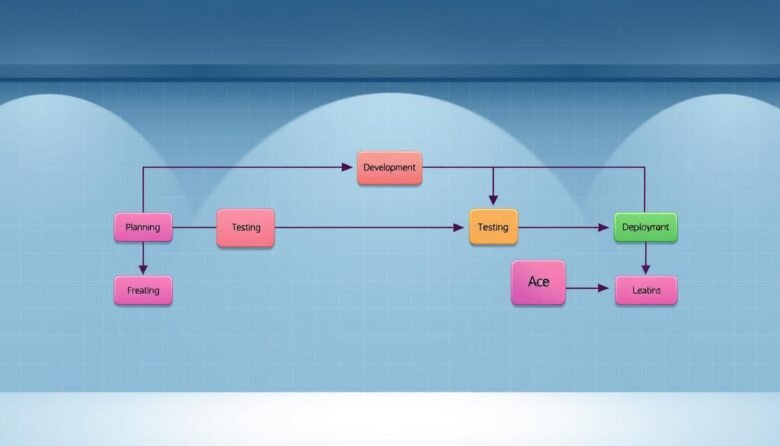
Getting software out the door efficiently is crucial for any engineering group. Effective release management helps teams balance multiple goals while maintaining quality. This process ensures new features reach users quickly while keeping products stable.
Compact engineering groups face unique challenges. They need scalable operations without complex enterprise tools. Limited resources mean every step must count toward delivering value.
The right approach helps technical work align with business objectives. It’s not about having the most sophisticated tools. Instead, it’s about implementing processes that match your group’s size and needs.
This article explores practical strategies designed specifically for smaller organizations. You’ll learn how automation, clear communication, and standardized methods form the foundation of successful deployment systems.
Key Takeaways
- Effective release management balances speed, quality, and stability
- Small engineering groups need scalable solutions without complexity
- The right workflow aligns technical work with business goals
- Practical strategies beat sophisticated tools for compact teams
- Automation and clear communication are essential foundations
- Standardized processes help maintain consistency and quality
- Tailored approaches work better than one-size-fits-all solutions
Understanding the Basics of Release Management for Small Teams
Moving new features and fixes from development to production demands careful coordination and validation. This systematic approach ensures quality while maintaining steady progress.
The Role of Release Management in Software Development
Release management serves as the crucial bridge between development work and live environments. It validates code changes through proper steps before they reach users.
This discipline maintains software quality and reduces deployment failures. It accelerates time-to-market for new capabilities and corrections.
Defining Key Concepts and Stages
The management process follows distinct stages that build upon each other. Planning defines scope and schedule for upcoming changes.
Build and configuration prepares the software package for testing. Validation occurs across different environments to catch issues early.
Deployment moves the approved changes to production. Monitoring observes performance after launch to ensure stability.
Understanding these fundamentals helps compact engineering groups implement efficient systems. They can maintain quality without extensive resources dedicated to complex management.
The Impact of Automation on Your Release Process
Modern development practices rely heavily on automated systems to handle routine deployment tasks. This approach transforms how engineering groups operate by eliminating repetitive manual work.
Automation creates consistency across your entire deployment cycle. It ensures every change follows the same validated steps regardless of timing or personnel.
How Automation Reduces Manual Tasks
Automated systems handle repetitive activities like code integration and testing. This frees developers to focus on creative problem-solving instead of routine chores.
The reduction in manual intervention significantly cuts down human error. Your team gains confidence knowing each deployment follows proven pathways.
Implementing CI/CD Pipelines Effectively
Continuous Integration and Delivery pipelines serve as the backbone of modern automation. They create seamless pathways from code commit to production deployment.
Start with basic automation and gradually expand your capabilities. This approach builds sustainable efficiency without overwhelming your team.
Effective implementation leads to faster feedback and more frequent deployments. Your engineering group can deliver value consistently and reliably.
Evaluating Essential Tools and Platforms for Workflow Efficiency
Navigating the landscape of deployment solutions demands understanding your organization’s specific requirements. The right selection can dramatically improve your operational effectiveness.
Many groups struggle with tool choices that don’t match their actual needs. Some platforms offer simplicity but lack essential capabilities. Others provide extensive features that overwhelm compact engineering units.
Comparing Minimalist and Robust Workflow Solutions
Minimalist tools like basic workflow apps provide straightforward interfaces. They work well for simple deployment scenarios. However, they often lack the depth needed for complex software delivery.
Robust platforms such as Octopus Deploy and Spinnaker offer comprehensive feature sets. These solutions handle sophisticated continuous delivery requirements. They support multi-environment deployments and advanced automation.
Cloud-based options like AWS CodePipeline and Azure Pipelines provide scalable infrastructure. These platforms integrate well with existing development ecosystems. They offer pay-as-you-go pricing models suitable for growing organizations.
The ideal solution balances current capabilities with future growth potential. It should match your team’s technical maturity while allowing room for expansion. Avoid choosing based solely on feature lists without considering actual workflow needs.
Implementing “release workflows for small teams”
The journey toward streamlined software delivery starts with mapping your existing procedures and pinpointing areas for enhancement. Begin by documenting how your group currently handles deployments from start to finish.
Step-by-Step Guide to Building Your Workflow
Start with a discovery phase where you identify current practices. List each action your group takes when preparing code for production. This reveals pain points that need addressing.
Define clear stages for your deployment process. Common phases include development, code review, testing, staging, and final deployment. Keep these stages simple and logical.
Begin with just one automated task instead of overhauling everything. Choose a repetitive manual activity that occurs regularly. This creates an early win that demonstrates value.
Use pre-built templates as starting points. These provide ready-made structures that accelerate setup. Customize them to match your specific project requirements.
Involve all group members in the design process. Their input ensures the workflow reflects actual working methods. This builds buy-in and acceptance.
Consider how your new system connects with existing tools. Ensure smooth integration with version control, issue tracking, and communication platforms.
Remember that implementation is iterative. Start with a basic version, gather feedback, and refine based on real usage. Perfection comes through gradual improvement.
Balancing Simplicity with Scalability in Workflow Management
Striking the right balance between immediate usability and long-term adaptability defines successful operational frameworks. This equilibrium ensures your system supports current operations without limiting future growth.
The most effective approach maintains straightforward processes while accommodating expansion as organizations evolve. It avoids both over-complication and under-investment in critical infrastructure.
Customizing Workflows for Evolving Team Needs
Flexibility becomes essential when your group’s requirements change over time. A customizable system allows adjustments without complete overhauls.
Start with standard configurations and add custom elements only when clear needs emerge. This incremental strategy prevents unnecessary complexity from the start.
Build processes that can grow with your organization’s changing demands. The goal is maintaining the simplest approach that effectively supports actual operational requirements.
When to Upgrade from Basic Tools
Recognizing upgrade signals helps prevent workflow bottlenecks before they impact productivity. Frequent workarounds and manual steps indicate system limitations.
Team frustration with tool constraints often signals the need for more robust solutions. Consider upgrades when integration limitations hinder collaboration.
Evaluate your current size against anticipated growth trajectory. Choose systems that serve both present requirements and future expansion needs.
Addressing Challenges and Mitigating Risks in Release Processes
Every deployment process carries inherent risks that require proactive identification and management strategies. These challenges can impact project timelines and user experience if not properly addressed.
Visibility issues often emerge when team members work across different tools or time zones. This makes it difficult to track progress and coordinate dependencies effectively.
Identifying Potential Bottlenecks
Manual approval steps frequently create delays in the deployment process. Testing environments can become contested resources, slowing down validation cycles.
Knowledge concentrated in specific team members presents another common bottleneck. When only one person understands critical components, the entire project faces risks.
Changes introduced during deployment can create cascading effects. These may impact user experience through bugs or performance issues.
Practical strategies include measuring cycle times for different stages. Regular team feedback helps identify where work accumulates.
Building redundancy for critical knowledge areas strengthens your management approach. Clear escalation paths ensure quick resolution when challenges arise.
Learning from each deployment challenge strengthens your overall process. This continuous improvement mindset turns obstacles into opportunities.
Integrating Agile and DevOps Best Practices into Your Cycle
Combining Agile and DevOps approaches creates a powerful synergy for managing software delivery cycles. These methodologies naturally support effective operations even without formal implementation.
Agile principles like iterative development and frequent deployments align perfectly with compact engineering groups. They enable quicker feedback loops and faster time to market.
Fostering Cross-Functional Collaboration
Successful integration requires breaking down traditional role boundaries. In smaller groups, members often wear multiple hats across development and operations.
This environment naturally encourages shared ownership of the entire delivery process. Everyone contributes to success rather than passing work between specialties.
Regular communication builds strong collaboration among team members. It ensures knowledge about deployments spreads across the entire group.
Embracing Continuous Improvement
Adopting a mindset of ongoing enhancement strengthens your delivery approach. Regular retrospectives help identify friction points in your current process.
Teams can implement incremental changes based on real-world experience. This practical method prevents burnout while steadily improving operations.
The combination of Agile flexibility and DevOps collaboration creates sustainable software development practices. It aligns technical work with broader business objectives effectively.
Leveraging Metrics and Analytics for Performance Optimization
Measuring what matters turns subjective opinions into objective improvement opportunities. The right data transforms how you approach deployment cycles and system enhancements.
Key performance indicators provide clear signals about your process efficiency. They help identify where to focus improvement efforts for maximum impact.
Tracking KPIs to Measure Success
DORA metrics offer industry-standard measurements that assess deployment maturity. These four indicators provide a comprehensive view of your project health.
Deployment frequency shows how often you deliver value to users. Lead time for changes measures how quickly code moves to production.
Time to restore service indicates your recovery speed from issues. Change failure rate reveals the stability of your deployment system.
Start with just two or three essential metrics rather than tracking everything. This prevents analysis paralysis while providing actionable insights.
Use automation to gather data passively without manual reporting overhead. The goal is continuous improvement, not individual performance evaluation.
Metrics should reveal opportunities for system enhancements rather than assigning blame. This creates a culture where data drives positive change.
Utilizing Automation and Integration to Streamline Releases
Streamlined operations emerge when automation meets comprehensive system integration. This powerful combination transforms how engineering groups handle software delivery. It creates efficient pathways from development to production environments.
Automation extends far beyond basic CI/CD pipelines. It should encompass environment provisioning, configuration management, and testing execution. Infrastructure as Code (IaC) represents a particularly valuable approach.
IaC lets you define entire infrastructure using version-controlled code. This ensures consistency across different environments. It enables rapid creation of staging and production setups.
Integration strategies connect your deployment processes with existing tools. They bridge version control systems, issue trackers, and communication platforms. This creates seamless information flow throughout the entire cycle.
Practical automation examples deliver immediate value. Consider automated rollback procedures when health checks fail. Automatic generation of release notes from commit messages saves significant time.
Prioritize automation efforts based on frequency and time consumption. Start with repetitive tasks that occur regularly. Gradually expand to more sophisticated automation as your foundation solidifies.
Maintain automation code with the same rigor as application code. This includes version control, documentation, and periodic reviews. Proper maintenance ensures your automation continues serving its intended purpose effectively.
Wrapping Up: Next Steps and Strategies for Smarter Releases
Effective deployment management represents an ongoing journey rather than a final destination. Your initial implementation marks just the first step toward lasting efficiency.
Begin by documenting your current processes and identifying the single biggest pain point. Involve all team members in solution design to build collective ownership.
Regular retrospectives help maintain momentum after implementation. Celebrate efficiency gains and continuously seek feedback about friction points.
Remember that the best approach is one your team actually follows consistently. Focus on simplicity and practicality over theoretical perfection.
Use built-in analytics to monitor key metrics and make data-informed adjustments. This continuous refinement based on real experience drives sustainable improvement.
Your compact engineering group can achieve remarkable results through thoughtful process design and appropriate automation. Keep evolving your methods as business needs change.