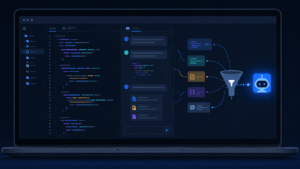
Artificial intelligence (AI) has revolutionized the way we interact with technology, and instruction-based AI is at the forefront of this innovation. One of the most significant advancements in this field is zero shot prompting, a technique that enables AI models to perform tasks without requiring extensive training data.
By leveraging zero shot prompting, users can enjoy more efficient and effective AI interactions. This approach allows AI models to understand and respond to complex instructions, making it an invaluable tool for various applications.
The Surprising Power of Instruction-Based AI Interactions
The way we interact with AI is changing, thanks to the power of instruction-based interactions. This shift is largely due to advancements in language models that can now understand and execute complex instructions without needing extensive training data for every specific task.
Breaking the Mold of Traditional AI Prompting
Traditional AI prompting often relies on extensive training datasets and examples to learn how to perform a task. In contrast, instruction-based AI interactions allow for more flexibility and efficiency, as the AI can understand and apply instructions directly. This approach is revolutionizing how we design and interact with AI systems.
The Cognitive Leap from Training to Application
The ability of modern language models to make a cognitive leap from training to application is a significant advancement. By understanding instructions, AI can apply learned concepts to new, unseen tasks. This capability not only enhances the versatility of AI but also opens up new possibilities for its application across various domains.
What Makes Zero Shot Prompting Different from Other Approaches
Unlike traditional AI prompting methods, zero shot prompting stands out due to its capacity to process novel instructions. This distinctive feature is not just a minor improvement but a significant advancement in how we interact with language models.
The “No Examples Needed” Advantage
One of the most compelling benefits of zero shot prompting is that it doesn’t require examples to understand the task at hand. This eliminates the need for extensive data preparation, making it a highly efficient method for a wide range of applications.
By leveraging the capabilities of advanced language models, zero shot prompting can interpret instructions based on their semantic meaning, rather than relying on patterns learned from large datasets.
How Language Models Process First-Time Instructions
Language models process first-time instructions by drawing upon their vast understanding of language structures and contexts. This enables them to generate responses based on the instruction’s intent, even if they’ve never seen the specific instruction before.
The ability to comprehend and act upon novel instructions is a hallmark of sophisticated language models, and zero shot prompting takes full advantage of this capability to provide accurate and relevant outputs without the need for prior examples or training data.
The Science and Psychology Behind Effective Prompts
The effectiveness of zero-shot prompting hinges on understanding the intricate science and psychology that govern how AI interprets human instructions. Effective prompt design is not just about conveying what you want the AI to do, but also about understanding how the AI’s “understanding” of language and context influences its responses.
Mental Models and AI Understanding
AI systems operate based on complex algorithms and mental models that are derived from vast amounts of training data. These models allow AI to make educated guesses about the intent behind a prompt. Understanding how AI interprets language and the limitations of its understanding is crucial for designing prompts that yield desired outcomes.
Why Human-Like Instructions Yield Better Results
Using human-like instructions can significantly improve the effectiveness of AI interactions. This is because AI systems are typically trained on vast amounts of human-generated text, making them more adept at understanding prompts that are framed in a way that is natural to humans. By leveraging this, users can craft prompts that are more likely to be interpreted correctly by the AI, leading to more accurate and relevant responses.
Smart Tasks: Designing Prompts That Get Results
The key to successful AI interactions lies in crafting smart tasks that yield precise results. Smart tasks are designed to elicit specific, accurate, and relevant responses from AI models, making them indispensable for a wide range of applications.
The Anatomy of a Smart Task
A smart task is characterized by its clarity, specificity, and relevance to the desired outcome. To design a smart task, one must consider the AI model’s capabilities, the context of the task, and the desired output. This involves crafting a prompt that is concise, yet informative, and free from ambiguity.
Breaking down complex tasks into simpler, manageable components is essential. This not only enhances the AI model’s understanding of the task but also improves the accuracy of the response.
Turning Complex Requests into Actionable Instructions
Complex requests can often be a challenge for AI models. However, by decomposing these requests into simpler, actionable instructions, users can significantly improve the model’s performance.
This involves identifying the key elements of the request, specifying the desired output, and providing any necessary context. By doing so, users can create actionable instructions that the AI model can execute efficiently, leading to more accurate and relevant results.
Clean Input: Crafting Crystal-Clear Prompts for Optimal Outputs
To get the most out of AI, it’s essential to understand how to craft clean and effective prompts. The clarity of the input directly influences the quality of the output, making it crucial to design prompts that are free from ambiguity and confusion.
The Principles of Noise-Free Prompt Design
Designing noise-free prompts involves several key principles. First, clarity is paramount; the language used should be straightforward and easy to understand. Second, specificity is crucial; the prompt should clearly state what is expected from the AI. This involves avoiding vague requests and focusing on well-defined tasks.
Another important aspect is contextual relevance. Providing enough background information or context can significantly improve the AI’s ability to generate relevant and accurate responses.
Eliminating Ambiguity and Confusion
Ambiguity and confusion can be major obstacles to achieving optimal outputs from AI models. To eliminate these, it’s helpful to define key terms and ensure that the language used is consistent throughout the prompt. Additionally, breaking down complex tasks into simpler, more manageable parts can help reduce confusion.
By applying these strategies, users can significantly enhance the effectiveness of their interactions with AI, leading to more accurate and relevant outputs.
Zero Shot Prompting vs. Few-Shot Methods: When to Use Each
Understanding the differences between zero shot prompting and few-shot learning is crucial for optimizing AI performance. While both methods are used to interact with AI models, they differ significantly in their approach and application.
Zero shot prompting involves providing a task or question to the AI without any prior examples or training data specific to that task. This method relies on the model’s pre-existing knowledge and its ability to understand the prompt.
Efficiency Comparison: Time and Token Savings
One of the key advantages of zero shot prompting is its efficiency. By not requiring examples, it saves time and reduces the number of tokens used, making it a cost-effective solution for many applications. In contrast, few-shot methods, which provide a few examples to the model, can be more time-consuming and token-intensive.
An efficiency comparison between the two methods reveals that zero shot prompting is particularly beneficial for simple, straightforward tasks where the AI’s pre-existing knowledge is sufficient.
Performance Analysis Across Different Tasks
When it comes to performance analysis, the choice between zero shot prompting and few-shot methods depends on the task’s complexity. For complex tasks that require a deeper understanding or specific context, few-shot methods may outperform zero shot prompting by providing the necessary examples to guide the model.
However, for tasks that are more generic or rely on common knowledge, zero shot prompting can be just as effective, if not more so, due to its ability to leverage the model’s broad pre-training.
Real-World Applications That Showcase Zero Shot Success
By enabling AI to understand and execute tasks without prior examples, zero shot prompting has transformed multiple sectors. This capability has far-reaching implications, from enhancing creativity to improving data analysis and decision-making processes.
Zero shot prompting is being successfully utilized in various real-world applications, demonstrating its versatility and potential. One of the key areas where it has shown significant impact is in content creation and creative writing.
Content Creation and Creative Writing
In the realm of content creation, zero shot prompting enables AI to generate high-quality content, such as articles, stories, and even entire books, without the need for extensive training data. This has opened up new avenues for writers and content creators, allowing them to focus on higher-level creative tasks.
Data Analysis and Information Extraction
Zero shot prompting is also being used to improve data analysis and information extraction. By providing clear and concise prompts, users can extract relevant information from large datasets without requiring extensive programming knowledge. This has significant implications for businesses and organizations looking to gain insights from their data.
Problem-Solving and Decision Support Systems
In the area of problem-solving and decision support systems, zero shot prompting enables AI to provide expert advice and support. By framing problems in a clear and concise manner, users can leverage AI to identify potential solutions and make informed decisions. This has the potential to revolutionize fields such as healthcare, finance, and logistics, where complex decision-making is critical.
The success of zero shot prompting in these areas demonstrates its potential to drive significant value across various industries. As the technology continues to evolve, we can expect to see even more innovative applications of zero shot prompting in the future.
Measuring and Improving Your Zero Shot Results
The key to successful zero shot prompting lies in understanding how to evaluate and enhance its performance. To achieve this, you need to employ a combination of qualitative and quantitative assessment methods.
Qualitative Assessment Frameworks
Qualitative assessment involves evaluating the relevance and accuracy of the AI-generated responses. This can be done by analyzing the output against the intended task or question. For instance, if you’re using zero shot prompting for content creation, you might assess the coherence, readability, and overall quality of the generated content.
To further refine your qualitative assessment, consider using frameworks that evaluate factors such as contextual understanding and response appropriateness. These frameworks can help you identify areas where your prompts may need adjustment.
Quantitative Metrics for Prompt Effectiveness
Quantitative metrics provide a numerical basis for evaluating prompt effectiveness. Metrics such as response length, keyword frequency, and task completion rate can offer insights into how well your prompts are performing. By tracking these metrics, you can identify trends and patterns that inform your prompt design.
Using a combination of qualitative and quantitative assessment methods, you can refine your zero shot prompting strategy to achieve better results. This iterative process of evaluation and refinement is crucial for maximizing the potential of zero shot prompting.
Advanced Zero Shot Prompting Techniques for Power Users
For those looking to elevate their zero shot prompting game, several advanced techniques can significantly enhance AI interactions. These methods allow for more sophisticated and tailored communication with AI models, resulting in more accurate and relevant outputs.
Role and Expertise Assignment Strategies
Assigning a specific role or area of expertise to the AI can dramatically improve the quality of responses. By defining the AI’s “persona,” users can tailor the output to their specific needs, whether it’s for technical explanations, creative writing, or data analysis. This technique helps the AI understand the context and provide more targeted information.
Context Framing and Background Information
Providing the right context and background information is crucial for effective zero shot prompting. Users can frame their prompts with relevant details to help the AI understand the task better. This might include defining key terms, specifying the desired tone, or outlining the scope of the task. By doing so, users can significantly enhance the accuracy and relevance of the AI’s responses.
Output Format Specification and Control
Controlling the output format is another advanced technique that can greatly enhance the usability of AI-generated content. Users can specify the desired format, such as a list, paragraph, or table, to suit their needs. This level of control allows for more efficient integration of AI outputs into various applications and workflows.
By mastering these advanced zero shot prompting techniques, power users can unlock the full potential of AI interactions, achieving more precise, relevant, and useful results.
Troubleshooting Common Zero Shot Prompting Challenges
Effective zero shot prompting requires more than just a good prompt; it demands a deep understanding of AI’s limitations and the ability to troubleshoot common challenges. When using zero shot prompting, users may encounter issues such as misinterpreted instructions or unexpected outputs.
Diagnosing and Fixing Misinterpreted Instructions
Misinterpreted instructions can lead to suboptimal results in zero shot prompting. To diagnose this issue, review your prompt for clarity and specificity. Ensure that the language used is concise and unambiguous. If the AI model is misinterpreting certain terms, consider rephrasing or providing context to help the model understand the intended meaning.
Iterative Refinement Without Examples
Refining your prompts without relying on examples is a crucial skill in zero shot prompting. Start by analyzing the AI’s response to your initial prompt. Identify any discrepancies between the expected and actual outputs. Then, iteratively adjust your prompt by making targeted changes to the language, structure, or context. This process allows you to refine your prompts effectively, even without examples.
By mastering the art of troubleshooting in zero shot prompting, you can significantly improve the accuracy and reliability of your AI interactions. This involves a combination of understanding AI’s limitations, crafting clear and specific prompts, and iteratively refining your approach based on the outputs received.
The Evolution of Human-AI Collaboration Through Better Prompting
As AI technology advances, the way humans interact with AI systems is undergoing a significant transformation. Better prompting techniques are at the forefront of this evolution, enabling more effective human-AI collaboration. By crafting clear and concise prompts, users can unlock the full potential of AI models, leading to more accurate and relevant outputs.
The future of AI interactions holds much promise, with potential developments in AI collaboration expected to revolutionize various industries. As humans and AI systems work together more seamlessly, we can expect to see significant improvements in areas such as content creation, data analysis, and problem-solving.
Better prompting is a key driver of this progress, allowing humans to communicate more effectively with AI systems. By continuing to refine our prompting techniques, we can unlock new possibilities for human-AI interaction, leading to more efficient and effective collaboration.

Spencer Blake is a developer and technical writer focused on advanced workflows, AI-driven development, and the tools that actually make a difference in a programmer’s daily routine. He created Tips News to share the kind of knowledge that senior developers use every day but rarely gets taught anywhere. When he’s not writing, he’s probably automating something that shouldn’t be done manually.